August 4, 2026 · 4 min
A text adventure should not feel like filing taxes
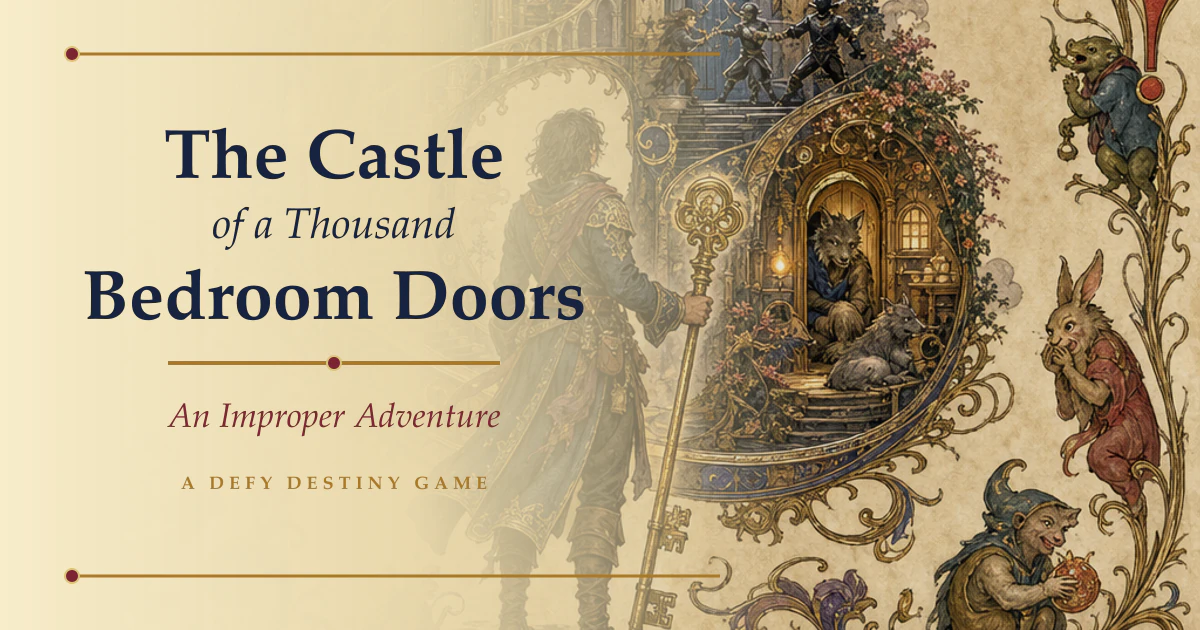
We shipped The Castle of a Thousand Bedroom Doors, a full-length fantasy comedy parser game and the reusable Defy Destiny TEXT engine beneath it.
The old parser games trusted text to carry a world. They also occasionally expected the exact phrase PUT RUG ON GRATING and killed you for having a synonym.
We kept the first part.
The Castle of a Thousand Bedroom Doors is a six-to-eight-hour fantasy comedy adventure played with typed commands. The player crosses six bedroom suites, steals useful conventions from one romantic fantasy to solve another, and eventually argues with the Castle about whether destiny is a binding contract.
It is bawdy. It is not coy. It also understands consent better than the building does, which is a low bar but an important one.
Making the parser generous
The command line needed to feel quick rather than judicial.
Objects have aliases. Common verbs collapse into consistent actions. Conversation commands understand topics and characters. Context supplies the obvious target when only one sensible one exists. Failed commands get authored responses instead of a generic shrug whenever the scene knows enough to be funny.
The system still has rules. A parser without rules is merely improv with a loading spinner. The trick was giving those rules enough vocabulary that the player can discover solutions rather than discover our preferred sentence.
Giving text stagecraft
We added scene plates for major thresholds, but every interaction remains text based. No hidden hotspots. No inventory object waiting to be dragged onto the correct pixel.
The more useful visual layer sits inside the prose. A new authored line can arrive with wet ink. A particular name can shudder. A concept can interrupt the layout when the Castle decides subtlety has had quite enough time.
These effects are rare. We tried them everywhere first. The page looked haunted by an underemployed PowerPoint designer.
Letting audio breathe
The finished runtime has thirteen music cues, thirty-two effects, and 175 Spotlight Voice lines. Music ducks for speech and important sounds. Captions cover both voice and meaningful effects. Mute is visible, and reduced-data mode does not quietly download the orchestra anyway.
Spotlight coverage was the useful middle. Major character turns get performance. Routine parser responses stay immediate. Stable cue IDs let us expand toward fuller dialogue later without rebuilding the script around filenames.
Building the next game at the same time
The Castle is content. TEXT is the game type.
Rooms, exits, interactions, puzzles, checkpoints, inventory, state, presentation effects, voice cues, sound cues, and endings live in validated project data. Defy Destiny Studio can open the Castle as connected suite projects, inspect the campaign, and manage the ledgers that feed the runtime.
That was the line we kept circling. A one-off game can hide a lot of decisions inside components. A builder has to admit what those decisions are called.
Shipping the improper thing
The release includes named saves, autosave, import and export, and three Fate Rewinds. The complete campaign leads to five endings. Browser tests cover every suite, save recovery, rewinds, all gender modes, audio, reduced motion, mobile layouts, and the handoff between Studio data and the playable game.
There is now a Castle in the catalogue and a TEXT builder behind the other door.
I keep thinking about the command log from playtesting. Sensible verbs. Puzzle attempts. Careful questions. Then, every few lines, someone trying to seduce a piece of furniture.